
When a loved one suddenly falls ill, choosing the right hospital becomes one of the most important decisions a family has to make. In such moments, people often focus only on the nearest hospital. However, the quality of care, availability of specialists, emergency services, and medical facilities can significantly influence the overall treatment experience.
How to Choose the Right Hospital for Your Family | Patient Guide | SERIMS
Choosing the right hospital can make a big difference in your treatment and recovery. Learn the key factors every patient and family should consider before selecting a hospital.
How to Choose the Right Hospital for Your Family: A Complete Patient Guide
Choosing the right hospital is one of the most important healthcare decisions a family can make. Whether it is a routine consultation, planned surgery, or a medical emergency, the quality of healthcare services can directly influence treatment outcomes and patient experience.
Instead of selecting a hospital only during an emergency, it is always better to understand what makes a hospital reliable. This guide explains the key factors every patient should consider before making a decision.
1. Qualified Doctors and Specialists
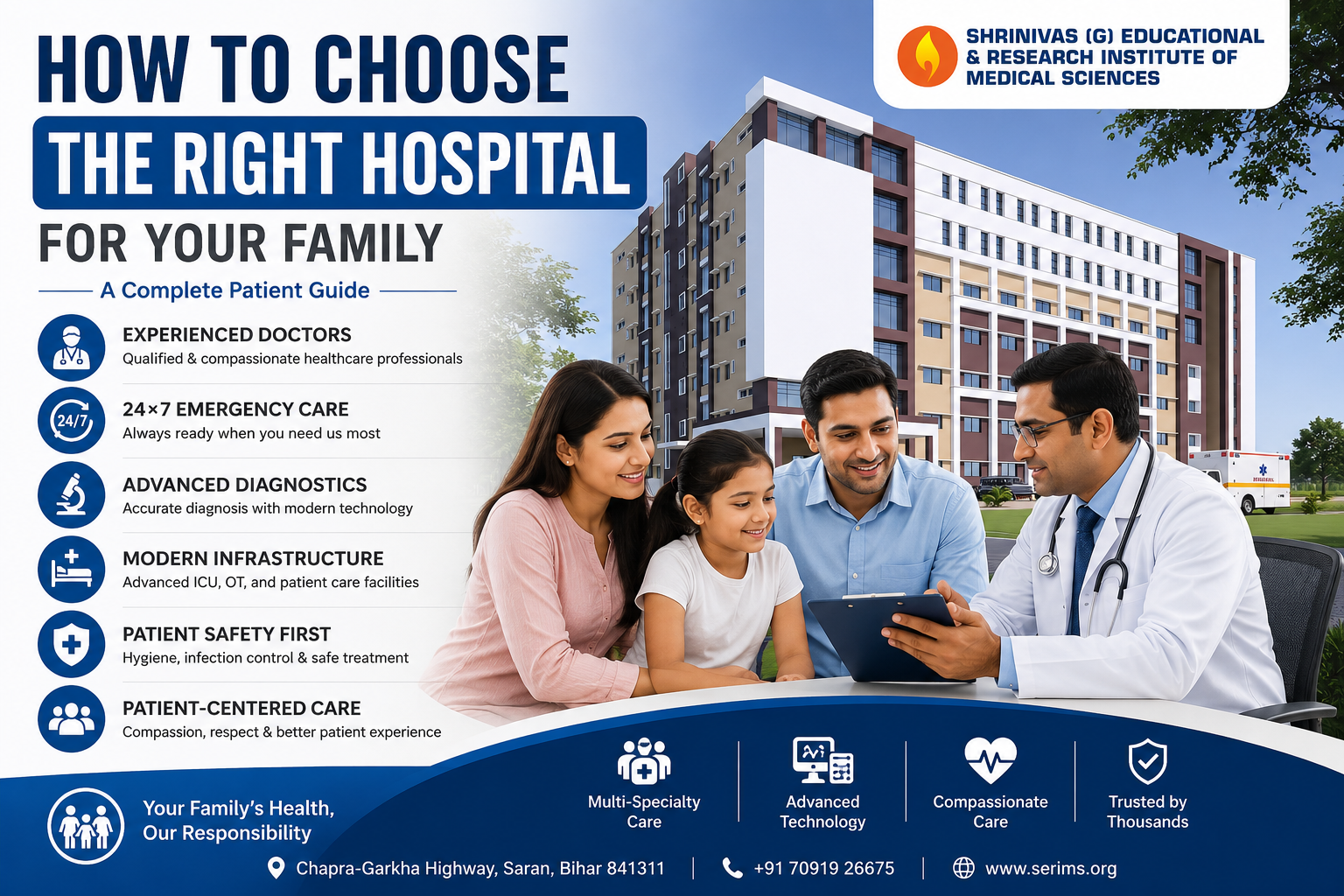
Look for hospitals with experienced doctors and specialists across multiple departments. Comprehensive medical expertise ensures better diagnosis and coordinated treatment.
2. 24×7 Emergency Care
Emergency services should be available around the clock for accidents, heart attacks, strokes, breathing problems, and other critical conditions.
3. Diagnostic Facilities
Hospitals with laboratory services, digital imaging, CT scans, ultrasound, X-ray, and pathology services help patients receive faster diagnosis and treatment.
4. Modern Infrastructure
- Advanced operation theatres
- ICU & Critical Care
- Well-maintained patient wards
- Pharmacy services
- Modern medical equipment
5. Hygiene and Patient Safety
Cleanliness, infection control, medication safety, and standard treatment protocols are essential for quality healthcare.
6. Compassionate Nursing Care
Nurses provide continuous monitoring, medication administration, emotional support, and timely assistance throughout treatment.
7. Accessibility
Easy road connectivity and quick access become extremely important during emergencies.
8. Multi-Specialty Services
Hospitals offering multiple specialties under one roof provide more convenient and coordinated care.
9. Patient Reviews
Patient experiences often provide valuable insights into service quality, doctor communication, staff behaviour, and overall satisfaction.
10. Patient-Centered Care
The best hospitals combine medical excellence with compassion, transparency, and respectful communication.
Why Choosing the Right Hospital Matters
Choosing a trusted hospital before an emergency helps families make informed decisions quickly and confidently.
Healthcare is not only about treating diseases—it is about caring for people with compassion, expertise, and responsibility.
About SERIMS
SERIMS is a teaching hospital dedicated to delivering patient-focused healthcare with experienced medical professionals, emergency care, modern infrastructure, and diagnostic facilities while supporting medical education and clinical excellence.
Frequently Asked Questions
How do I choose the right hospital?
Consider doctor expertise, emergency services, infrastructure, cleanliness, diagnostic facilities, and patient reviews.
Why are emergency services important?
Immediate medical care can improve recovery and reduce complications.
Should I choose a multi-specialty hospital?
Yes. It provides comprehensive treatment under one roof.
Does cleanliness matter?
Absolutely. Clean hospitals help reduce infection risks and support faster recovery.