
Monsoon diseases like dengue, malaria, typhoid and viral fever become common during the rainy season in Bihar. Learn their symptoms, prevention, treatment options, emergency warning signs and when to visit a trusted hospital in Chapra, Saran and nearby areas.
Monsoon Diseases in Bihar: Symptoms, Prevention, Treatment & When to Visit Hospital
By SERIMS | Healthcare Guide
The arrival of the monsoon season brings welcome relief from the scorching summer heat across Bihar. Fields turn green, rivers begin to flow again, and the weather becomes pleasant. However, along with these positive changes, the rainy season also increases the risk of several infectious diseases that affect thousands of people every year.
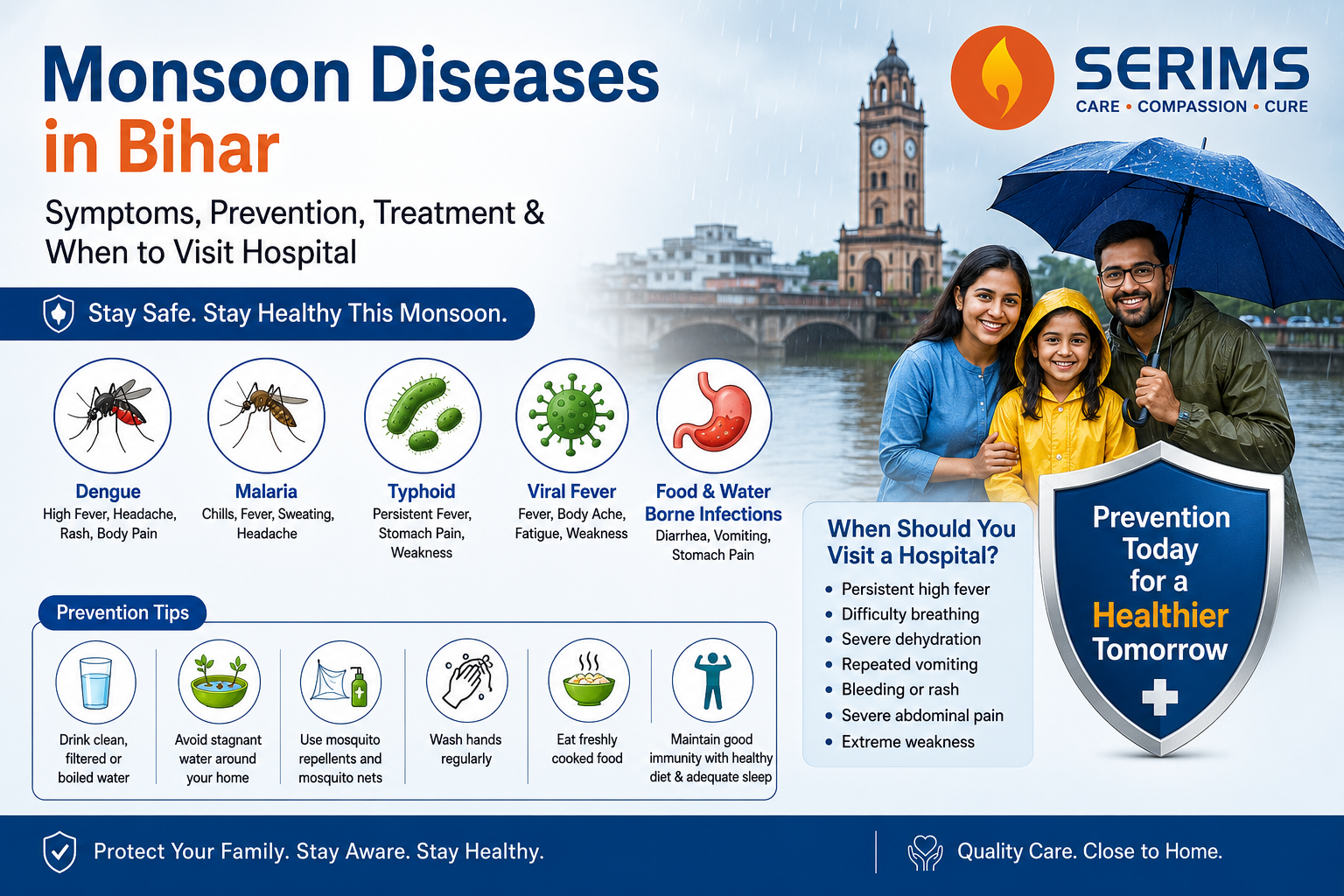
Across districts such as Chapra, Saran, Siwan, Patna, Gopalganj, Muzaffarpur, Hajipur, and many other parts of Bihar, hospitals often witness a significant rise in patients suffering from dengue, malaria, typhoid, viral fever, food poisoning, stomach infections, and other water-borne diseases during the monsoon months.
One of the biggest mistakes people make is assuming that every fever is just a seasonal illness that will disappear on its own. While some infections are mild, others can become life-threatening if medical attention is delayed. Early diagnosis, proper treatment, and timely consultation with qualified healthcare professionals can prevent serious complications and save lives.
- Why monsoon diseases increase in Bihar
- The most common diseases during the rainy season
- Early warning signs you should never ignore
- Available treatment options
- Simple preventive measures for your family
- When to visit a doctor immediately
- When emergency hospital care becomes necessary
Whether you are searching for information about Dengue Treatment, Malaria Treatment, Typhoid Treatment, or looking for the Best Hospital in Chapra or the Best Hospital in Saran, this guide will help you understand how to protect yourself and your loved ones during the monsoon season.
Why Do Monsoon Diseases Increase in Bihar?
Every year, the monsoon season creates favorable conditions for the spread of infectious diseases across Bihar. While rainfall provides relief from extreme summer temperatures, it also brings several health challenges. Waterlogging, increased mosquito breeding, contaminated drinking water, and poor sanitation contribute to a significant rise in seasonal illnesses.
In districts such as Chapra, Saran, Siwan, Gopalganj, Patna, Muzaffarpur, and many rural areas, hospitals experience a noticeable increase in patients suffering from dengue, malaria, viral fever, typhoid, stomach infections, and dehydration during the rainy season.
The combination of warm temperatures and high humidity allows bacteria, viruses, and mosquitoes to multiply rapidly. Even a small amount of stagnant water collected in buckets, flower pots, coolers, discarded tyres, or open containers can become a breeding ground for mosquitoes within a few days.
Children, older adults, pregnant women, and people living with chronic illnesses such as diabetes, hypertension, heart disease, kidney disease, or respiratory disorders are at a greater risk of developing severe complications from monsoon-related infections.
Major Reasons Behind Monsoon Diseases
- Water stagnation leading to mosquito breeding.
- Contaminated drinking water after heavy rainfall.
- Poor drainage systems in urban and rural areas.
- Consumption of unhygienic street food.
- Poor hand hygiene.
- High humidity that promotes bacterial and viral growth.
- Weak immune systems among children and elderly individuals.
Fortunately, most monsoon diseases are preventable. Maintaining personal hygiene, drinking safe water, eliminating stagnant water around homes, and seeking medical advice at the earliest signs of illness can significantly reduce the risk of serious complications.
Dengue: One of the Most Common Monsoon Diseases in Bihar
Dengue has become one of the fastest-growing mosquito-borne viral infections in India. During the monsoon season, the number of dengue cases usually rises because rainwater creates ideal breeding conditions for the Aedes aegypti mosquito, which spreads the dengue virus.
Unlike many other mosquitoes, the Aedes mosquito usually bites during the daytime, especially in the early morning and late afternoon. It breeds in clean, stagnant water rather than dirty drains, which means even water stored inside homes can become a source of infection.
How Does Dengue Spread?
Dengue does not spread directly from one person to another through physical contact. The infection spreads when an infected Aedes mosquito bites a healthy person. Once infected, symptoms generally begin within four to ten days.
Early Symptoms of Dengue
- Sudden high fever
- Severe headache
- Pain behind the eyes
- Muscle and joint pain
- Extreme body ache
- Nausea and vomiting
- Loss of appetite
- Skin rash
- General weakness and fatigue
Many patients initially mistake dengue for seasonal viral fever because the early symptoms are quite similar. This is why proper medical evaluation and laboratory testing are important instead of relying only on home remedies.
Warning Signs That Require Immediate Medical Attention
While many dengue patients recover with supportive treatment, some may develop severe dengue, which requires urgent hospitalization.
- Persistent vomiting
- Severe abdominal pain
- Difficulty breathing
- Bleeding from gums or nose
- Blood in vomit or stool
- Extreme weakness
- Restlessness
- Confusion
- Very low blood pressure
If any of these symptoms appear, patients should seek emergency medical care immediately instead of waiting for the condition to improve on its own.
Does Every Dengue Patient Have Low Platelets?
One of the biggest misconceptions about dengue is that every patient will experience a dangerous drop in platelet count. In reality, platelet levels vary from patient to patient.
Doctors evaluate several clinical findings including hydration status, blood pressure, oxygen levels, laboratory investigations, and overall condition before deciding on the appropriate treatment plan. Therefore, patients should never panic solely because of platelet numbers without consulting a qualified physician.
Diagnosis of Dengue
Doctors may recommend different laboratory investigations depending on the duration and severity of symptoms.
- Complete Blood Count (CBC)
- Platelet Count
- NS1 Antigen Test
- Dengue IgM Test
- Dengue IgG Test
- Liver Function Tests (if required)
Timely diagnosis allows doctors to monitor disease progression and provide appropriate supportive care before complications develop.
Treatment of Dengue
There is currently no specific antiviral medicine that cures dengue. Treatment mainly focuses on managing symptoms, maintaining hydration, and closely monitoring the patient's condition.
- Drink plenty of clean fluids.
- Take ORS as advised.
- Get adequate rest.
- Eat light and nutritious meals.
- Follow your doctor's instructions carefully.
- Attend follow-up blood tests if recommended.
Patients should never start antibiotics or painkillers without medical advice because certain medicines may increase the risk of bleeding.
How to Prevent Dengue
- Do not allow water to collect around your home.
- Empty coolers and water containers regularly.
- Use mosquito repellents.
- Install window screens where possible.
- Wear full-sleeved clothing.
- Sleep under mosquito nets if necessary.
- Keep rooftops, balconies, and gardens clean.
Community awareness is equally important. Preventing mosquito breeding around homes, schools, offices, hospitals, and public places can significantly reduce the spread of dengue across Bihar during the rainy season.
Malaria: A Serious Mosquito-Borne Disease During the Monsoon
Malaria is another common disease that affects thousands of people across Bihar every year, especially during and immediately after the monsoon season. Although malaria is preventable and treatable, delayed diagnosis can lead to serious health complications, particularly in young children, older adults, pregnant women, and individuals with weakened immune systems.
The disease is caused by Plasmodium parasites, which are transmitted through the bite of an infected female Anopheles mosquito. Unlike the mosquito responsible for dengue, Anopheles mosquitoes usually bite from dusk until dawn, making nighttime protection extremely important.
How Does Malaria Spread?
Malaria spreads when an infected female Anopheles mosquito bites a healthy person and transfers the parasite into the bloodstream. Once inside the body, the parasite travels to the liver, multiplies, and then infects red blood cells, causing fever and other symptoms.
Malaria does not spread through casual contact such as shaking hands, sharing food, or living with an infected person.
Common Symptoms of Malaria
The symptoms usually appear between 7 and 30 days after being bitten by an infected mosquito. The severity depends on the type of malaria parasite and the overall health of the patient.
- High fever with chills
- Excessive sweating after fever
- Recurring fever cycles
- Severe headache
- Muscle pain and body ache
- Fatigue and weakness
- Nausea and vomiting
- Loss of appetite
- Dizziness
In many cases, malaria symptoms may resemble viral fever or dengue during the early stages. This is why laboratory testing is essential for an accurate diagnosis.
Who Is at Greater Risk?
- Children below five years of age
- Senior citizens
- Pregnant women
- People with diabetes or heart disease
- Patients with weakened immune systems
- Individuals living in mosquito-prone areas
Warning Signs That Should Never Be Ignored
Severe malaria can become life-threatening if treatment is delayed. Immediate medical attention is necessary if any of the following symptoms appear:
- Difficulty breathing
- Repeated vomiting
- Loss of consciousness
- Confusion or unusual behavior
- Seizures
- Very low blood pressure
- Persistent high fever
- Dark-colored urine
- Severe dehydration
Diagnosis of Malaria
Doctors diagnose malaria using laboratory investigations. Depending on the patient's symptoms and medical history, one or more of the following tests may be advised:
- Rapid Malaria Antigen Test
- Peripheral Blood Smear Examination
- Complete Blood Count (CBC)
- Liver Function Test (if required)
- Kidney Function Test (if required)
Accurate diagnosis helps doctors determine the type of malaria parasite and choose the most appropriate treatment plan.
Treatment of Malaria
Malaria can usually be treated successfully if diagnosed early. Treatment depends on the type of parasite, the patient's age, existing medical conditions, and the severity of infection.
Patients should never purchase anti-malarial medicines without consulting a qualified doctor. Self-medication may delay proper treatment and increase the risk of complications.
During treatment, patients are generally advised to:
- Complete the full course of prescribed medicines.
- Drink plenty of fluids.
- Take adequate rest.
- Eat light and nutritious meals.
- Attend follow-up visits if recommended.
How to Prevent Malaria
The best way to prevent malaria is to reduce exposure to mosquito bites and eliminate mosquito breeding sites.
- Sleep under mosquito nets.
- Use mosquito repellents regularly.
- Wear full-sleeved clothes, especially in the evening.
- Keep doors and windows protected with screens.
- Remove stagnant water from your surroundings.
- Clean rooftop water tanks and coolers regularly.
- Maintain proper sanitation around your home.
Community participation is one of the most effective ways to reduce malaria cases. Every household should ensure that rainwater does not remain stagnant for long periods, as this creates an ideal breeding environment for mosquitoes.
Important Health Advice
Never ignore fever that continues for more than two or three days during the rainy season. Fever accompanied by chills, body pain, weakness, vomiting, or breathing difficulty should always be evaluated by a qualified physician. Early diagnosis and timely treatment significantly reduce the risk of severe illness and improve recovery.